
Unlock symposium interviews
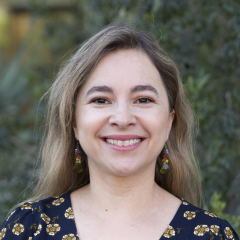
Anca Delgado (Arizona State University)
is keynote speaker at second UNLOCK symposium in Wageningen
“I hope for an impactful outcome of UNLOCK”
Anca Delgado, Associate Professor of Environmental Engineering at Arizona State University, kicks off the second UNLOCK symposium. Her keynote is entitled: When Kluyver meets McCarty: reductive dehalogenation mediated by chain elongation. We asked Anca four questions.
Anca, what is your field of research and what are you researching?
“I am working on a collaborative project with Wageningen Professor David Strik on the characterization of microbiomes involved in plastic fermentation and chain elongation. The goal is to obtain microbial isolates that can be used to create synthetic microbial communities but also to study these interesting and useful anaerobic metabolisms.”
What do you think about the UNLOCK initiative? Why is joining forces so important to achieve scientific breakthroughs?
“The UNLOCK facility has state of the art instruments and excellent technical experts. Our team is particularly excited about Raman spectroscopy profiling and Raman cell sorting of microbial cells in complex anaerobic communities. I’ve really enjoyed my time working on the project in UNLOCK and I hope for an impactful outcome of the project.”
Are you looking forward to your visit to Wageningen Campus? What are you most looking forward to?
“I have been at Wageningen University & Research since the end of August. I have met a lot of faculty, students, and staff but look forward to networking and meeting more at the UNLOCK symposium.”
Can you give a hint? What will you bring to the symposium participants?
“My research group at Arizona State University tackles an important challenge restricting chlorinated solvent bioremediation: providing sufficient hydrogen gas for microorganisms to dechlorinate chlorinated solvents and managing competition for hydrogen in the subsurface. Our group is focusing on a microbial process called chain elongation to yield the required hydrogen for reductive dechlorination. My presentation will highlight fundamental knowledge on chain elongation for chlorinated solvent dechlorination reactions and the road from laboratory to bioremediation field trials at contaminated sites.”
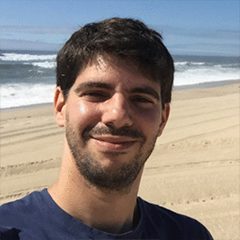
João Sousa (Paques Biomaterials)
about the UNLOCK symposium:
“We hope to inspire others on how UNLOCK can provide deep and robust insights”
João Sousa hosts a keynote with his college Jelmer Tamis during the UNLOCK symposium. Both will talk about a solution to the problem of plastic pollution: renewable PHA biopolymers.
João, what exactly is the field of research you and Jelmer will be talking about?
“Our field of research is the production of PHA biopolymers. More specifically, we are looking at the use of mixed cultures as raw materials, fed with organic-rich residual.”
What do you think about the UNLOCK initiative? Why is joining forces so important to achieve scientific breakthroughs?
“Getting more insights into how complex microbial communities is key to improve process control and future technological improvements. To get robust insights with high-scientific relevance, different disciplines need to come together. For our case, it is key to combine process technology, microbiology and chemistry. UNLOCK provides the infrastructure where we can evaluate how our microbial communities develop under different selective pressure conditions. And, also, how that affects PHA producing microbes. In the past, we had a project together with TU Delft where parallel reactor cultivation was used to screen parameters for PHA production. We could definitely see the power of this approach as the insights obtained are still being used at Paques Biomaterials.”
Are you looking forward to your visit to Wageningen Campus? What are you most looking forward to?
“During the last years, UNLOCK partners have been developing their infrastructure. Now, they are performing their first research projects. We are very curious to see how this research is going and to see the quality of the newly generated insights. We had experience with parallel cultivation, but the combination with the other groups of UNLOCK could also deliver new tools for our development.”
Can you give a hint? What will you bring to the symposium participants?
“We will show participants how Paques Biomaterials is using complex mixed microbial communities to bring to market a solution to plastic pollution: PHA biopolymers. However, producing PHA using mixed cultures can be achieved with a variety of selective pressure approaches, each with its pros and cons. Diving into our past experience with TUD for parallel cultivation, we will show how we could address some of the knowledge gaps within these different approaches using the UNLOCK infrastructure.”
What should your audience retain from your keynote?
“We hope to show the audience the potential of PHA production using mixed cultures, and how we could use it to produce a great plastic alternative, using locally available residual feedstocks. We also hope to inspire others on how the UNLOCK infrastructure can provide deep and robust insights into microbiological processes in a short period of time.”
Speaker bios
Dr. Thomas Wagner
Thomas Wagner coordinates the constructed wetland research at the Department of Environmental Technology of Wageningen University. His current research focusses on better understanding micropollutant removal mechanisms in natural systems – plant uptake, sorption and biodegradation – and using this knowledge for developing innovative constructed wetlands with enhanced micropollutant removal efficiency.
Asst. Prof. Siddharth Deshpande
Siddharth Deshpande is an interdisciplinary scientist fascinated by living systems and keen on understanding how biomolecules self-organize to form functional modules necessary for life. Since 2019, Siddharth leads his EmBioSys lab at Wageningen University, the Netherlands, embedded within the Laboratory of Physical Chemistry and Soft Matter. The broad vision of the EmBioSys lab is to tackle unsolved biological questions through creative biomimetic systems and create soft matter-based materials with biotechnological potential. His current research tackles diverse topics: from shaping synthetic cells and studying protein phase separation, to designing biosensors and making particle-stabilized emulsions. The use and development of on-chip microfluidic technology for controlled experimentation forms an integral part of the lab. Siddharth is always keen on exploring unknown directions and has carried out a variety of collaborative research over the years, from surface-sensing by bacteria and developing antibiotic-screening platforms, to directed evolution of proteins and adhesion mechanism of ticks.
Dr. Jinsong Wang
Jinsong Wang is a postdoctoral researcher in the Department of Biotechnology at TU Delft, where he also serves as the technical manager for the Parallel Cultivation Platform of UNLOCK. Before joining UNLOCK, Dr. Wang completed his PhD at Wageningen University & Research and postdoc research at KU Leuven, where he mainly focused on micropollutant biodegradation in oligotrophic waters. His current research interests include anaerobic resource recovery from waste(water), with a particular emphasis on microbial interactions within complex communities.
Dr. Paulina Lesiczka
Paulina Maria Lesiczka is a scientific employee at the Centre for Monitoring of Vectors (CMV) at the Netherlands Institute for Vectors, Invasive Plants and Plant Health (NIVIP). Based in Wageningen, she spends her days immersed in the world of ticks, developing a tick surveillance plan to keep them in check. Her biology adventure began many years ago in Poland, where she worked in population genetics—using molecular analysis to track down stolen wood. But a few years ago, she discovered that ticks were far more interesting than timber, so she shifted her focus to tick ecology and the eco-epidemiology of tick-borne pathogens.
Before arriving in Wageningen, Paulina was a Postdoctoral Researcher at the Czech University of Life Sciences Prague, where she led research in a molecular lab on the role of wildlife in the spread of tick-borne diseases. She earned her PhD studying tick-borne pathogens, proving that her fascination with ticks runs deeper than their bites! And yes, she has a favorite tick-borne pathogen: Anaplasma phagocytophilum. Today, she’s here to take you into the fascinating world of ticks with her presentation, Tick Tack Ticks: How Deep Can You Go?
Dr. Anca Delgado
Anca Delgado received a Ph.D. in Microbiology from Arizona State University and is currently an Associate Professor of Environmental Engineering in the School of Sustainable Engineering and the Built Environment and the Biodesign Swette Center for Environmental Biotechnology at Arizona State University. Dr. Delgado’s expertise is environmental biotechnology with a focus on the use of natural and artificial microbiomes for bioremediation, bioming, and production of biochemicals. Dr. Delgado is a Thrust Leader and Principal Investigator in the NSF-sponsored Engineering Research Center for Bio-mediated and Bio-inspired Geotechnics (CBBG), working on environmental projects funded by NSF and CBBG-industry partners.
Dr. Jelmer Tamis
Jelmer Tamis is a Dutch environmental biotechnologist specializing in sustainable resource recovery and bioplastic production. He earned his PhD in Environmental Biotechnology from TU Delft, focusing on producing bioplastics from organic waste streams to promote sustainable material production.
Since 2015, Jelmer has been a Process Specialist at Paques BV, where he develops technologies for producing polyhydroxyalkanoates (PHA) from organic waste. With the founding of Paques Biomaterials in 2020, he shifted focus to bringing PHA technology to market. His work involves application development and downstream processing, concentrating on finding the most effective selective pressures to cultivate stable microbial cultures with high PHA content and scaling these processes up for full-scale industrial use.
Dr. João Sousa
João Sousa came to the Netherlands in 2012 to acquire his PhD degree in Microbiology via Wageningen University and Wetsus. Soon after, he started working at Paques, a global leader in anaerobic wastewater and biogas treatment. There he became Head of Emerging Technologies, managing a team and project portfolio with the goal of producing higher value products from various waste streams. In 2021, Paques Biomaterials was carved out from Paques to pursue its own path towards implementing PHA production from waste streams. Following his passion, João joined this new adventure from day 1 as Technology Development Lead, keeping an overview on all R&D developments from PHA accumulation by bacteria, PHA extraction and application development.
Assoc. Prof. Johannes Hohlbein
Johannes Hohlbein is an Associate Professor in the Laboratory of Biophysics at Wageningen University & Research (the Netherlands). His lab has been working on studying DNA-protein interactions in vitro and advancing single-molecule detection schemes. The current research in the lab is focussed on exploring DNA-RNA-protein interactions in live bacteria and performing functional food imaging using super-resolution microscopy and related techniques.


