Microbial research to make piglets less dependent on antibiotics
20 March 2025
In modern farming, piglets are separated from their mother at an early age. This ‘weaning’ makes the animals vulnerable to all kinds of infectious diseases. It is a known fact that microorganisms play an important role in that process. But it is still quite unclear what mechanisms are behind it. And that is a thorn in the side of Hauke Smidt. He deploys the Biodiscovery Platform of UNLOCK to reduce the use of antibiotics through the microbiome.
Smidt and his his colleagues from Wageningen as well as other universities in Denmark and the United States accumulate knowledge on the microbiome of pigs in the international research project PIG-PARADIGM. They also investigate interactions with the animal itself and its feed. Goal is to reduce the dependency on antibiotics and to improve the well-being of the animals: “Weaners are vulnerable to infectious diseases, such as diarrhoea and Streptococcus infections. That means it still requires many antibiotics to cure the animals. We want to investigate whether the microbiome of piglets can be influenced with feed supplements, among other things, in such a way that animals will be needing less antibiotics.”
According to Smidt, the UNLOCK Biodiscovery Platform facilitates two types of studies. First, mechanistic research into microorganisms, and the activities and conversions these microorganisms are involved in. That could be organisms present in an animal, as investigated in PIG-PARADIGM. It could also involve microorganisms that break down toxic substances from domestic and industrial waste streams and in contaminated soil and groundwater. Second, the Biodiscovery Platform facilitates the isolation and characterisation of new kinds of microorganisms. “UNLOCK enables us to deploy a broad range of different approaches instruments to become more familiar with these microorganisms. Irrespective of whether these are located in bioreactors or in nature.”
Sorting and cultivating microorganisms
In the PIG-PARADIGM project, Smidt and a group of enthusiastic researchers first map the composition of the microbiome of pigs: “We first take poop and other samples from hundreds of young piglets. We look at the microorganisms contained in these samples and how the microbiome develops in the course of time, and how this development is related to the health of the animals. That requires a lot of bioinformatics, and the knowledge and facilities for this are delivered by the FAIR Data Platform of UNLOCK. We then try to simulate that development in the lab. To do so, we use mixed cultures of which we know the exact contents. We will study those mixed cultures in bioreactors: how do they behave, how stable are they? And: is it possible for us to influence these mixed cultures by adding certain feed supplements or microorganisms?
“Microorganisms have been my long-term motivation to conduct research. They are crucial to almost everything surrounding us.”
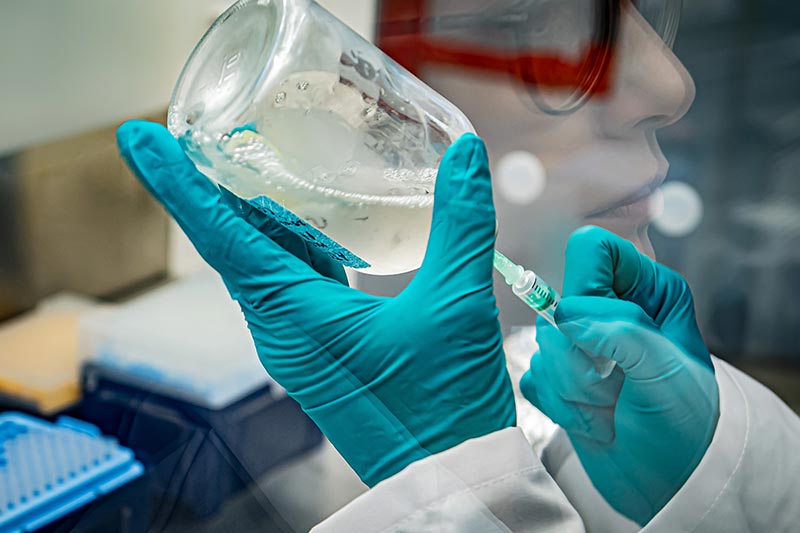
One of the challenges the team is facing, is that they currently do not have many of the microorganisms they want to put in the bioreactor. “We know them, we know they are present in piglets, but they have not yet been isolated. The Biodiscovery Platform of UNLOCK has the instruments required to sort microorganisms based on certain properties. That enables us to find out, for example, to what group these microorganisms belong and what nutrients they use. Based upon that knowledge, we can sort and cultivate separate cells.”
Better feed, less antibiotics
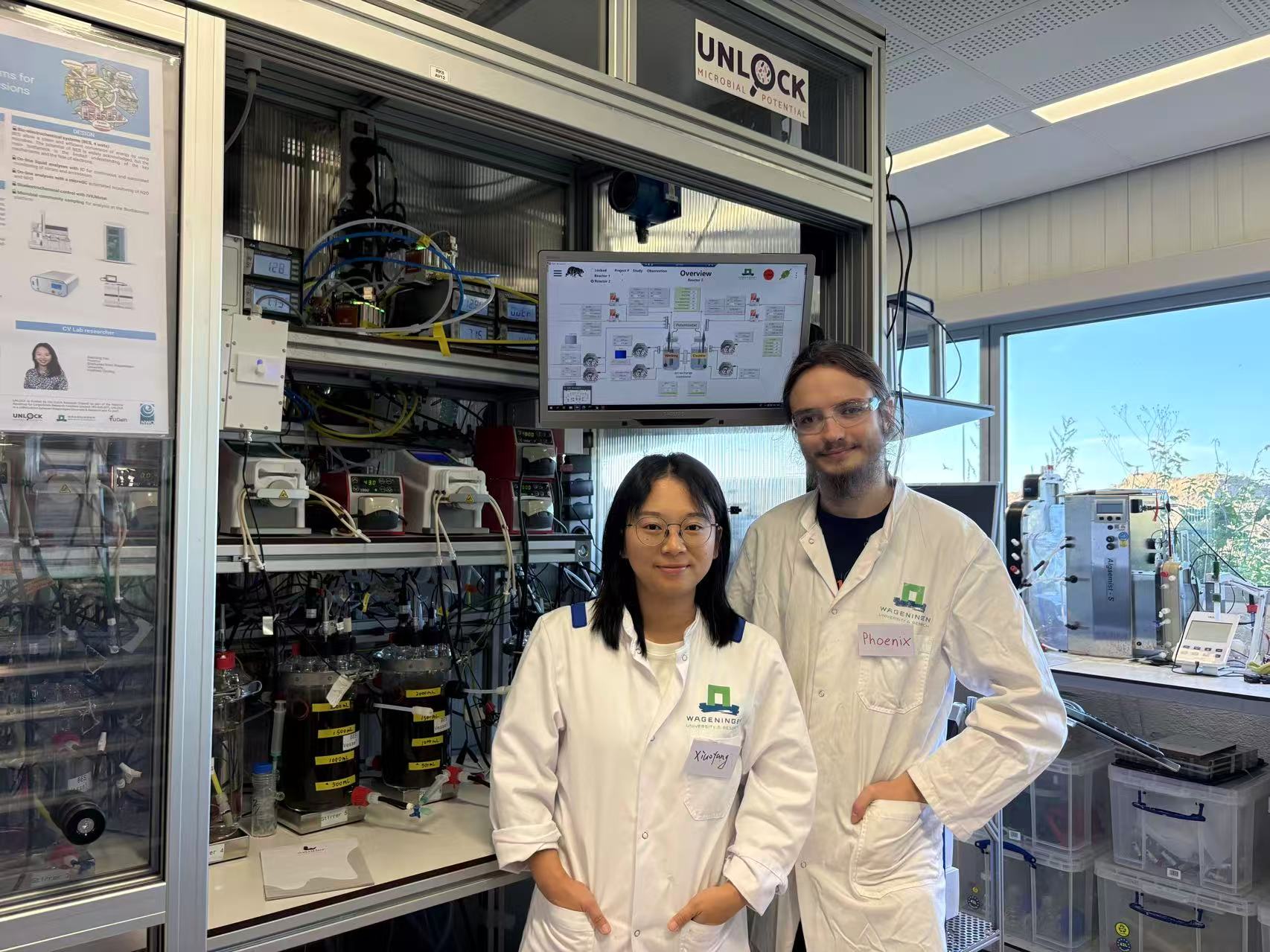
Different microorganisms can be combined in high-throughput mini-bioreactors in Wageningen. These mixtures can then be transferred to the large bioreactors at the Parallel Cultivation Platform in Delft. Smidt: “This research is an excellent case, because we are able to utilise the complementary facilities and research infrastructure of UNLOCK during all stages of the study.”
He hopes the project will contribute to better feed for piglets, resulting in a better development of the microbiome and a reduction in the use of antibiotics: “We know that the development at a young age is determinative for the resilience at an older age.”
Looking a bit further into the future, it is expected to be possible to administer customised microorganisms to piglets in order to make sure they have a good start in life. “You might have heard about the poop transplantations during which the stool of a healthy donor is transferred to a sick person or animal. Administering a mixed culture of healthy microorganisms is the same principle, only that we know exactly which microorganisms are in the mix.”
Crucial, invisible world
“Crazy exciting”, is the term Smidt uses for the research into microorganisms. “They have been my long-term motivation to conduct research. Microorganisms form an invisible world that is crucial for nearly everything surrounding us. UNLOCK now provides us with the instruments and knowledge to learn a lot more about it. The major advantage is that we built the infrastructure and facilities from the very beginning. That is why everything now interlocks precisely.”
If it were up to him, UNLOCK grows into the epicentre of integrated research for microbial communities: “We attract fellow scientists from around the world and companies that are looking to use our facilities and infrastructure to conduct their own research into new products. But there are also students who use our knowledge and facilities for their studies. Here, we can contribute to the education of a new generation of scientists with knowledge of the entire spectrum of research for microbial communities. UNLOCK has the potential to grow into something big.”