20 October 2026
Introduction
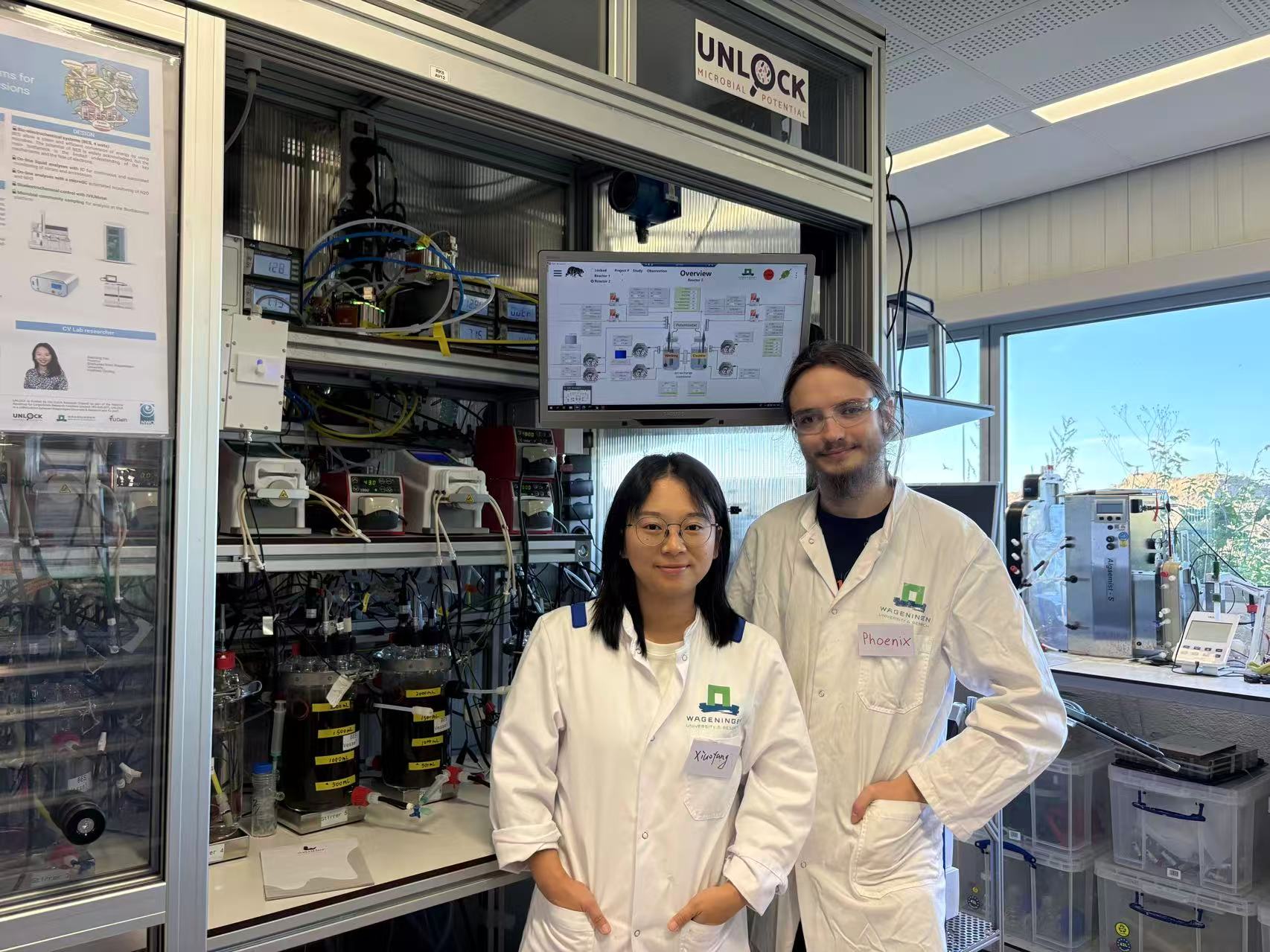
In this feature highlighting researchers who use UNLOCK’s facilities, we spoke with Xiaofang Yang, whose research investigates how anode potential influences ammonium oxidation in bioelectrochemical reactors. The study explores how different operating potentials affect ammonium removal and product distribution, while examining whether current generation is directly linked to ammonium oxidation. By combining controlled reactor operation with online gas and liquid analysis, the research provides insights into the biological and electrochemical processes involved in nitrogen conversion. Ultimately, the work aims to improve understanding of bioelectrochemical ammonium removal and its potential applications. The experiments were conducted using the UNLOCK Modular Bioreactor Platform, with support from Phoenix Smid, an internship student who helped set up the reactor and conduct the experiments.
Could you briefly describe the focus of your research?
My research investigates whether and how anode potential affects ammonium oxidation in a bioelectrochemical reactor, particularly its rate and product distribution. The initial aim was to identify suitable operating potentials and assess whether bioanodic ammonium oxidation could offer advantages over conventional biological ammonium removal.
What were the key goals or research questions you aimed to explore?
The key questions were whether applying an anode potential enhances ammonium oxidation, how different potentials affect the oxidation rate and product distribution, and how the process compares with conventional biological ammonium removal. As the study progressed, a further question became central: does the measured current actually reflect ammonium oxidation?
What methods or technologies did you use as part of your project?
I used bioelectrochemical reactors operated at different controlled anode potentials, together with open-circuit experiments to evaluate the contribution of electrochemical operation. A potentiostat controlled the anode potential, while current and cathode potential were monitored. Ion chromatography (IC) measured dissolved nitrogen species, including ammonium, nitrite and nitrate, while online micro-gas chromatography (MicroGC) monitored gas composition on both the anode and cathode sides. Together, these measurements allowed me to examine nitrogen conversion, gas production and electrochemical responses.
What were the most significant results or key findings of your study?
An unexpected finding was that ammonium removal remained similar under applied-potential and open-circuit conditions. Changes in potential and current were not accompanied by corresponding changes in ammonium removal. These observations suggest that applying an anode potential did not provide a clear removal benefit under the tested conditions and that current alone is not a reliable indicator of ammonium oxidation. This shifted the focus towards understanding the pathways sustaining ammonium removal and identifying the reactions contributing to the current.
Which UNLOCK platforms or tools did you use during your research?
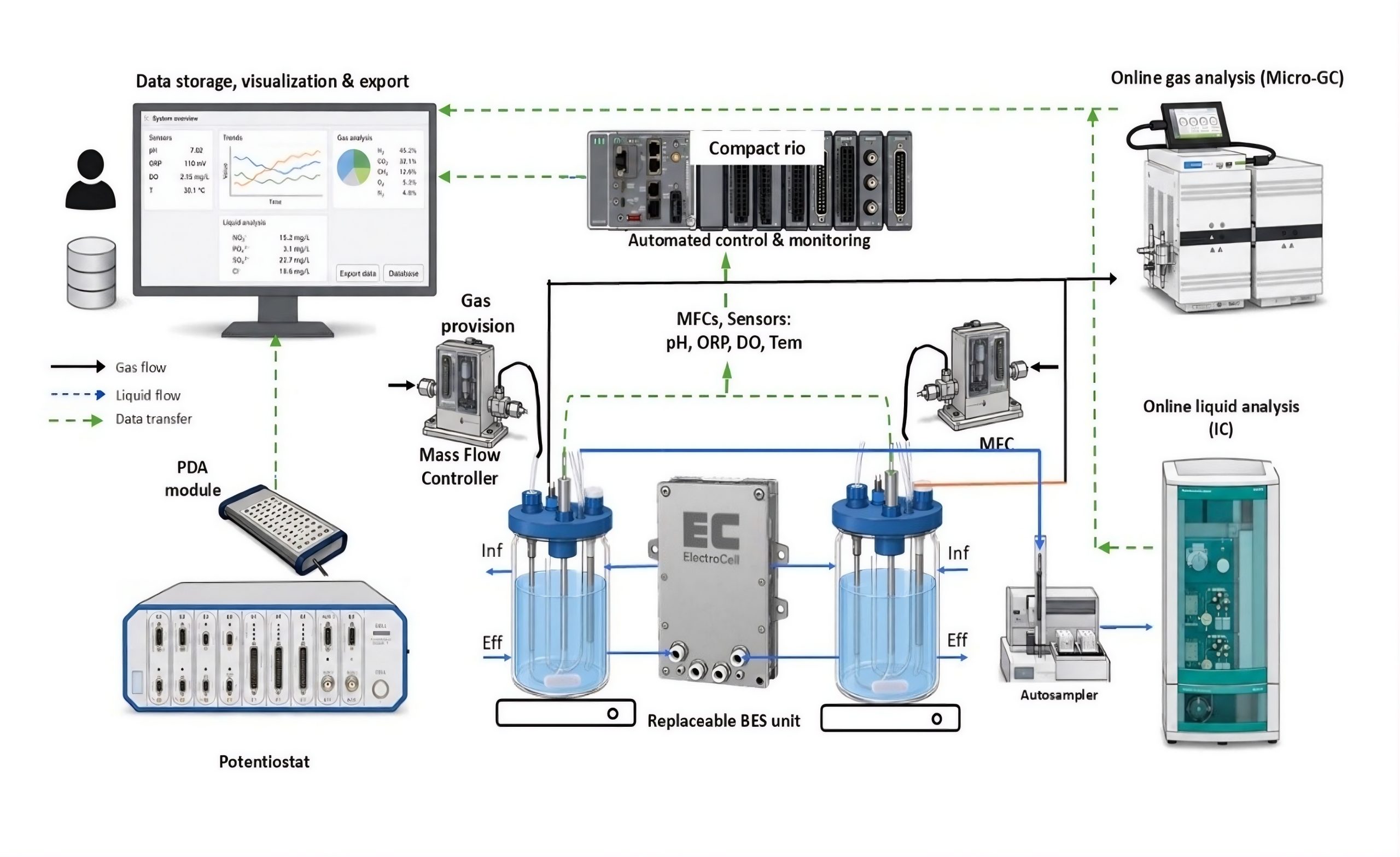
I used UNLOCK’s modular bioelectrochemical system (BES), which integrates a replaceable electrochemical cell with controlled gas supply, electrochemical measurements, and online gas and liquid analysis (Figure 1). Different anode potentials were applied using a potentiostat, and open-circuit experiments were conducted to evaluate the contribution of electrochemical operation. Current and electrode potentials were monitored alongside ammonium, nitrite and nitrate concentrations measured by ion chromatography (IC). Online MicroGC measurements tracked gas composition on both the anode and cathode sides.
A key feature of the platform is its automated online data transfer: measurements from the reactor sensors, electrochemical instruments and analytical equipment are brought together in a central database for visualization and export. This integrated approach allows changes in operating conditions, current and reaction products to be examined together, supporting a more comprehensive understanding of the processes occurring in the reactor.
How did UNLOCK facilities support or enhance your work?
UNLOCK enabled me to combine controlled reactor operation with online gas/liquid analysis and electrochemical monitoring. Automated measurements reduced manual sampling and helped capture changes following adjustments to the operating conditions. Centralized data storage and visualization made it easier to compare reactor conditions, gas composition and current over time, providing a more complete picture of the processes occurring in the system.
Were there any specific technical challenges or discoveries you encountered while using the platform?
A key challenge was distinguishing electrode-driven ammonium oxidation from other biological processes, particularly because trace oxygen entry could not be completely excluded. An unexpected finding was that ammonium removal continued under open-circuit conditions without a clear decrease. These observations highlighted the importance of considering both electrochemical responses and the biological changes occurring during long-term operation.
What did you find most valuable about working with UNLOCK?
The most valuable aspect was having reactor control, analytical measurements and data visualization integrated into one platform. This allowed me to connect changes in operating conditions with biological and electrochemical responses, helping me interpret unexpected observations and identify questions for further investigation.
Has your experience with the platforms influenced your current or future research direction?
Yes. It encouraged me to look more closely at the mechanisms behind the observed performance. My focus expanded from optimizing anode potential to understanding whether ammonium conversion and current generation are actually connected. It also strengthened my interest in using online monitoring to investigate dynamic processes, particularly nitrogen conversion and greenhouse gas emissions.
Do you have any advice or tips for future students or researchers planning to work with UNLOCK?
Include appropriate controls from the beginning and keep a clear record of operational changes. Remain open to unexpected results—they may reveal more about the system than the original hypothesis.