10 April 2026
Introduction
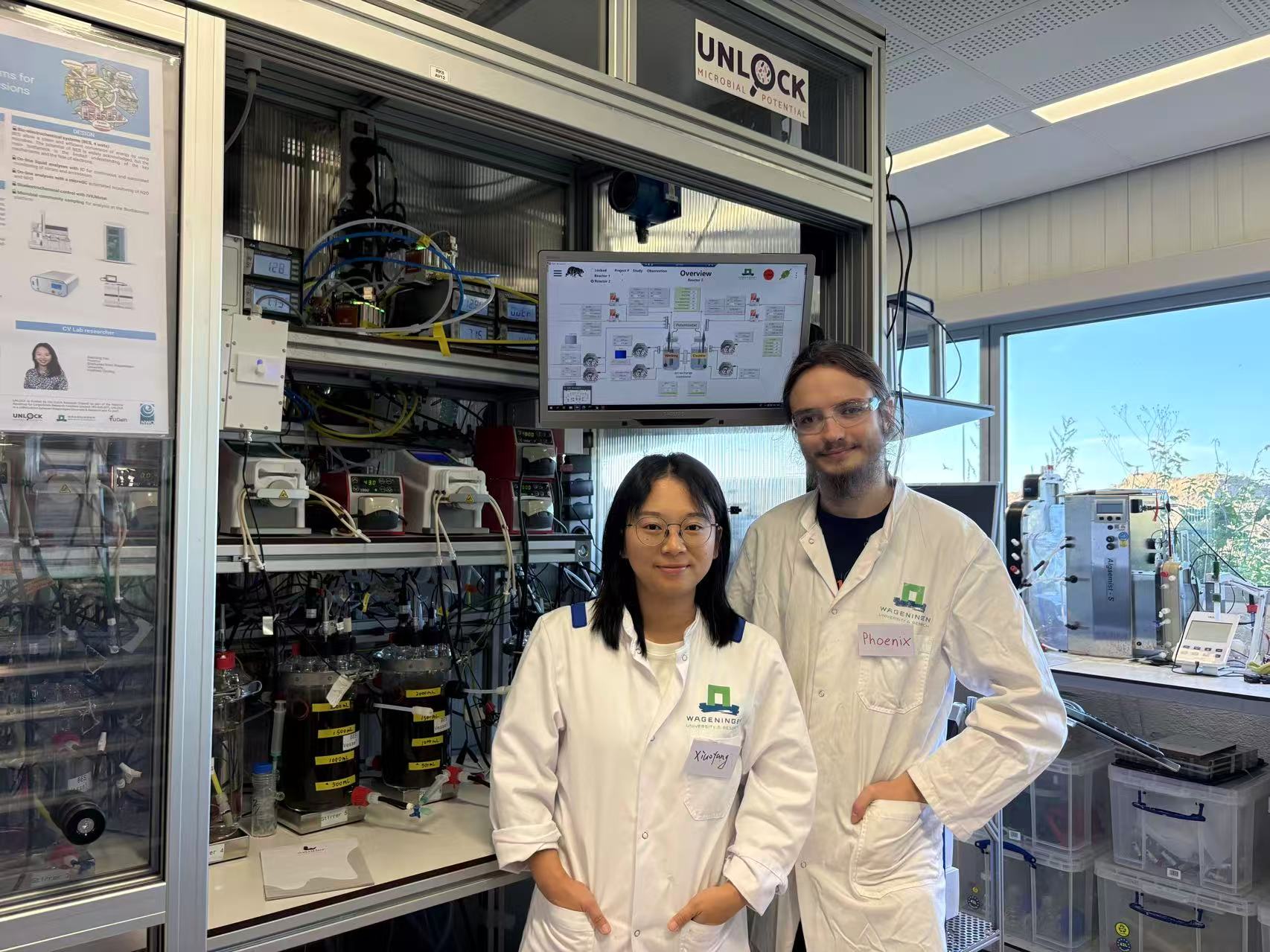
In this edition highlighting researchers who use UNLOCK’s facilities, we spoke with Silvana Inés Quiton Tapia, whose work explores the role of dissolved organic carbon (DOC) in groundwater systems. The research focuses on how DOC quality and concentration influence the metabolic strategies of oligotrophic microorganisms and their capacity to biotransform micropollutants. By examining how microbes balance growth and respiration under varying carbon conditions, the study provides new insights into the mechanisms driving micropollutant removal. Ultimately, the work aims to support the development of more effective in situ biodegradation strategies for groundwater purification. The experiments were conducted using the UNLOCK Modular Bioreactor Platform.
Could you briefly describe the focus of your thesis research?
My research focuses on the influence of DOC (dissolved organic carbon) on the biotransformation of micropollutants in groundwater. Think of it as studying how a microbe’s diet changes its ability to clean up the water around it.
What were the key goals or research questions you aimed to explore?
I wanted to see how DOC quality (composition) and quantity (concentration) influence the metabolic strategies of oligotrophic microorganisms and consequently their capacity to biotransform micropollutants. If we can understand how DOC affects their removal, we can engineer in situ biodegradation strategies that can help remove micropollutants during their passage through aquifers.
What methods or technologies did you use as part of your project?
From UNLOCK, I used flow cytometry, which allowed me to quantify biomass growth under oligotrophic conditions by using only a very small volume, which was very useful for me as I had limited volume in my microcosm experiments.
What were the most significant results or key findings of your study?
We found that oligotrophic microbes have different metabolic strategies depending on the DOC availability (both in quality and quantity). We observed that under oligotrophic conditions, microorganisms prioritize biomass synthesis, while in carbon-saturated conditions, respiration dominates and there is less growth.
These insights allowed us to better understand the influence of DOC on micropollutant biotransformation. We were also able to determine an optimal DOC concentration window for micropollutant removal, as we observed that too high concentrations inhibit micropollutant biotransformation due to substrate competition, but too little DOC also yields insufficient catabolic capacity.

Which UNLOCK platforms or tools did you use during your research?
I worked within the Modular Bioreactor Platform, where I used flow cytometry.
How did UNLOCK facilities support or enhance your work?
Beyond just the equipment, it was the precision that mattered. The facility allowed me to get high-resolution data on how microbial populations shift in real time, which would have been nearly impossible with conventional methods for determining biomass growth.
Were there any specific technical challenges or discoveries you encountered while using the platform?
Actually, no, everything worked quite smoothly.
What did you find most valuable about working with UNLOCK?
The flexibility. I was able to fully customize my methods to my needs.
Has your experience with the platform influenced your current or future research direction?
The data I was able to retrieve from the UNLOCK facility has provided me with a more complete understanding of the different metabolic strategies of microorganisms. In the future, I will always consider that microbial activity includes respiration but also growth.
Do you have any advice or tips for future students or researchers planning to work with UNLOCK?
Have fun doing research. There is a lot of cool equipment available to help understand how microbes work.