27 January 2026
Introduction
As part of our series highlighting users of UNLOCK’s research facilities, we spoke with Jinsong, a researcher working on innovative strategies for enriching microbial communities for biopolymer production from wastewater. J’s research explores how temporally separating carbon and nitrogen supply can enhance polyhydroxyalkanoate (PHA) accumulation in mixed microbial cultures. This work was conducted using the UNLOCK Parallel Cultivation Platform.
Could you briefly describe the focus of your thesis research?
My research focuses on developing and testing a strategy in which carbon and nitrogen are supplied separately over time to microbial communities. This approach is used to enrich mixed microbial cultures (MMCs) that can store large amounts of polyhydroxyalkanoates (PHAs), a biodegradable bioplastic. The overall goal is to improve the efficiency of microbial biopolymer production from wastewater, thereby supporting the transition of wastewater treatment from pollution control toward resource recovery.
What were the key goals or research questions you aimed to explore?
The main goals of my research were to:
- Understand how the separation of carbon and nitrogen supply influences microbial enrichment and PHA accumulation.
- Evaluate how operational parameters, such as the carbon-to-nitrogen (C/N) ratio and the exchange ratio (ER), affect intracellular PHA storage.
What methods or technologies did you use as part of your project?
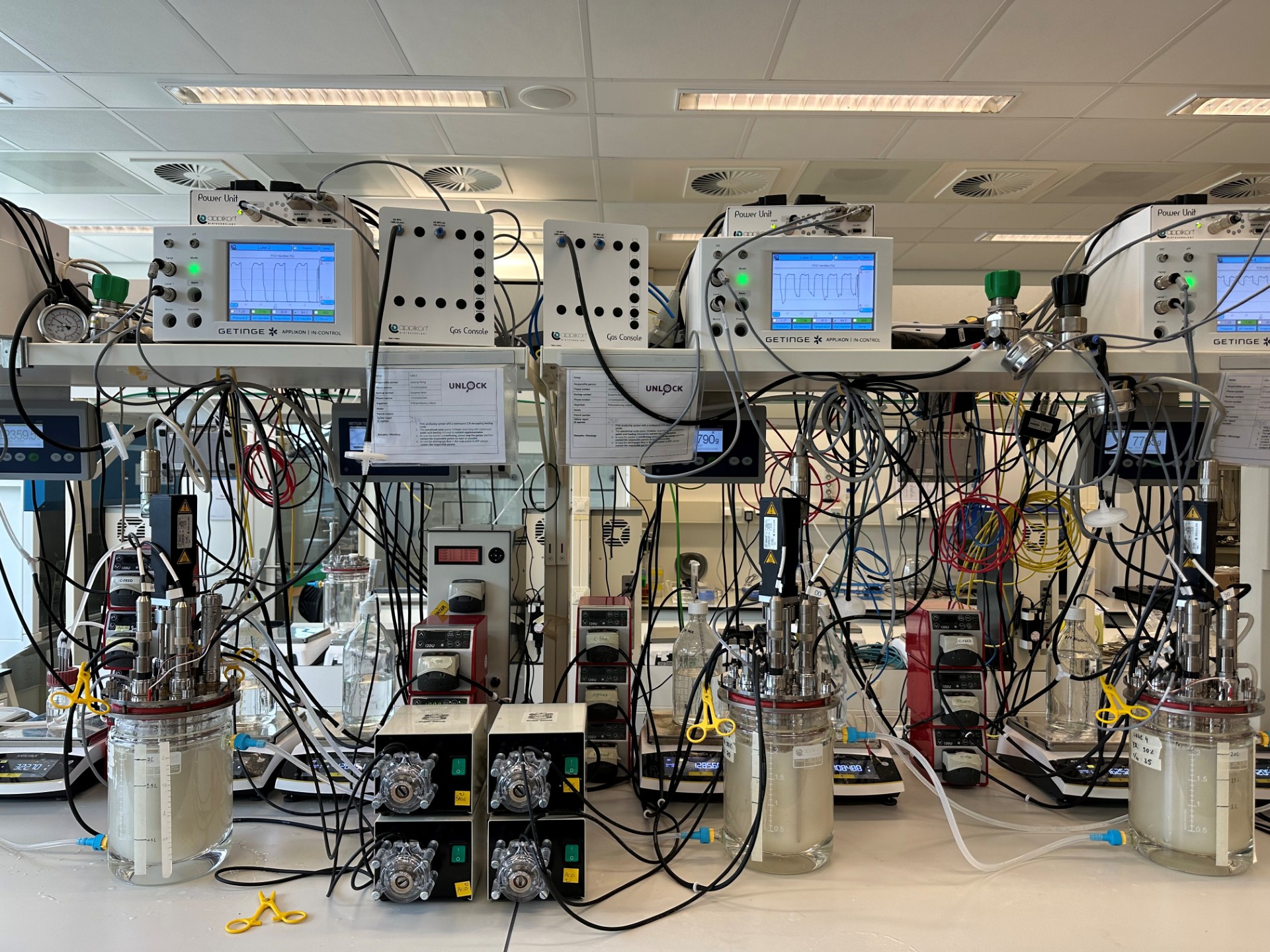
I operated three aerobic sequencing fed-batch bioreactors in parallel under controlled conditions. The systems were continuously monitored online for dissolved oxygen, pH, and off-gas composition, combined with automated dosing of substrates and nutrients. Regular sampling and analytical methods were used to quantify acetate, ammonia, biomass, intracellular PHA content, and amino acid profiles, allowing a detailed assessment of microbial metabolism throughout the operational cycles.
What were the most significant results or key findings of your study?
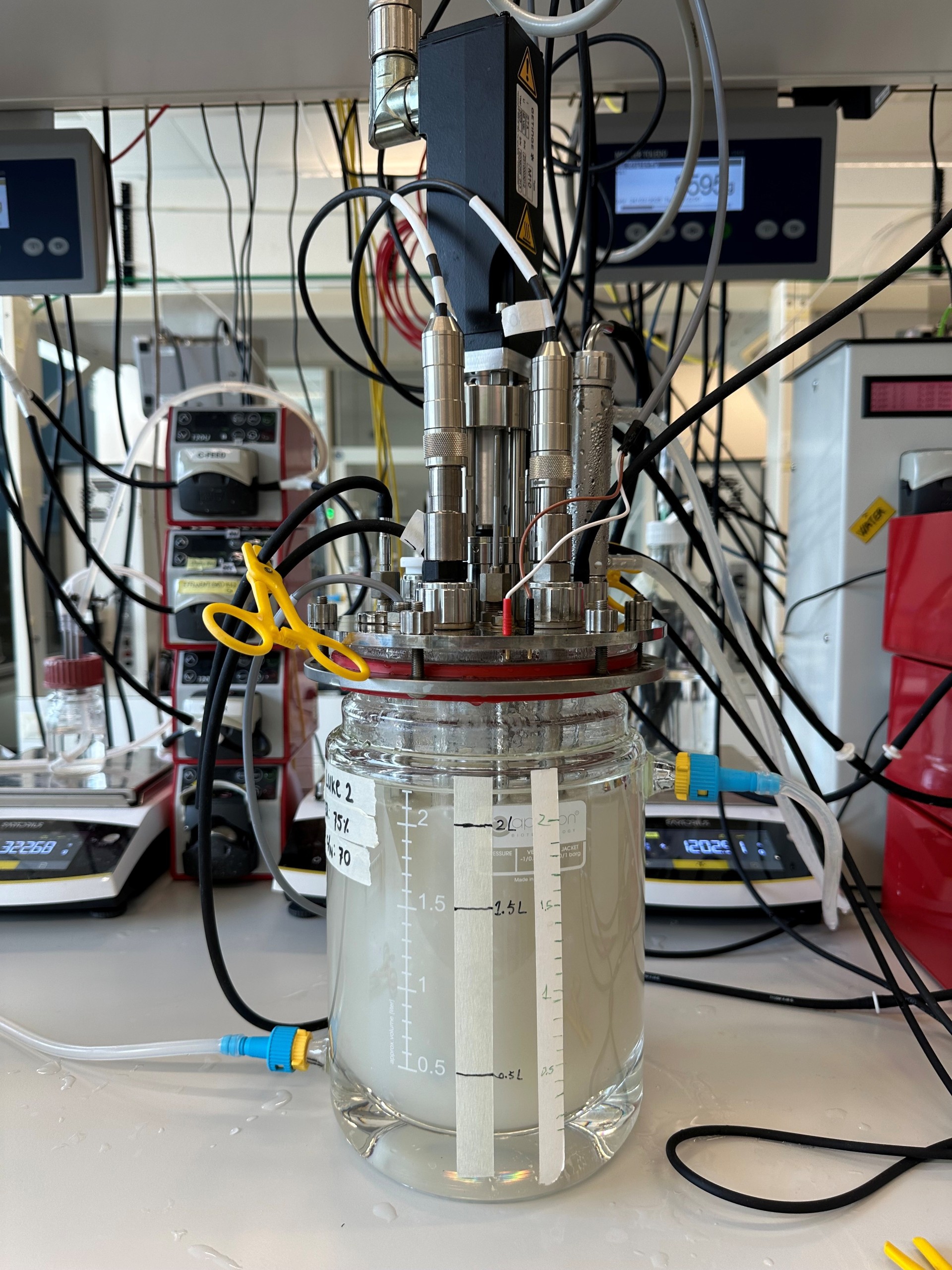
The results showed that a strict uncoupling of carbon and nitrogen feeding imposed a strong selective environment favoring PHA-accumulating microorganisms. By increasing the C/N ratio and exchange ratio (ER), intracellular PHA content increased significantly, reaching up to ~80% of cell dry weight at C/N = 70 and ER = 75%. In addition, incomplete PHA consumption during nitrogen feeding and increased intracellular amino acid levels suggested that the enriched community was capable of simultaneous carbon and nitrogen hoarding, which requires further investigation in future studies.
Which UNLOCK platforms or tools did you use during your research?
I conducted my experimental work using the UNLOCK Parallel Cultivation Platform, which enabled the simultaneous operation of multiple bioreactors under well-defined and comparable conditions.
How did UNLOCK facilities support or enhance your work?
UNLOCK provided a highly controlled, modular, and parallel experimental environment, which was essential for systematically testing different operational strategies. The platform’s advanced automation and monitoring capabilities allowed the precise implementation of uncoupled feeding regimes and ensured high reproducibility across reactors, significantly strengthening the robustness of my results.
Were there any specific technical challenges or discoveries you encountered while using the platform?
A key technical challenge was maintaining strict separation between carbon and nitrogen feeding while keeping the reactors stable at different exchange ratios. The modular pump systems and advanced online control at UNLOCK helped to overcome this challenge. An important discovery enabled by the platform’s high-resolution monitoring was the observation of ongoing metabolic activity and biomass growth during the carbon-feeding phase, even under nitrogen limitation. This observation ultimately led to the hypothesis of intracellular nitrogen storage.
What did you find most valuable about working with UNLOCK?
UNLOCK integrates four research platforms, including molecular microbiology facilities, bioreactor systems, and data analysis infrastructure for multi-omics studies. This unique combination makes it possible to bridge fundamental microbial ecology with applied bioprocess engineering. In particular, the Parallel Cultivation Platform allowed me to translate fundamental research concepts into practical reactor operation while maintaining flexibility and industrial relevance.
Has your experience with the platform influenced your current or future research direction?
Yes, this experience reinforced my interest in engineering microbial communities through selective enrichment strategies rather than pure cultures. It has also shaped my current and future research toward integrated resource recovery concepts with contaminant remediation towards a circular wastewater treatment system.
Do you have any advice or tips for future students or researchers planning to work with UNLOCK?
I would recommend investing time early on in clearly defining your experimental strategy and monitoring plan, as the platform offers great flexibility but benefits from careful design. Actively engaging with the technical team and other UNLOCK users is also very helpful for understanding the strengths of each platform. Finally, making full use of the automation and online data-logging capabilities can greatly improve both data quality and scientific insight.